
Drying fresh basil from your garden in a dehydrator
Every summer, basil is the herb that gets away from me. A couple of plants do remarkably well, I get busy, and then one day I walk past the garden and BAM, it’s in bloom.
Basil is still good after it blooms, but flowers signal the plant that its life cycle is winding down, time to make seeds and call it a day. So when I catch mine flowering, I pinch off the blossoms and harvest heavily. And when I harvest more basil than I can use fresh, drying is my answer. Dried basil takes up almost no space, it’s easy to use all winter, and quality dried herbs fetch a pretty penny at the grocery store — preserving your own is real savings.
If it’s your first time, don’t worry: drying herbs is easy, like crazy easy. No degree in food science needed. But fair warning — basil is the slowpoke of the herb garden. Its thick, fleshy leaves hold a lot of moisture, so it takes longer than any other herb I dry.
This is part of my series on preserving herbs — for the full rundown of methods and storage, see my guide to dehydrating fresh herbs.

Harvesting Basil for Drying
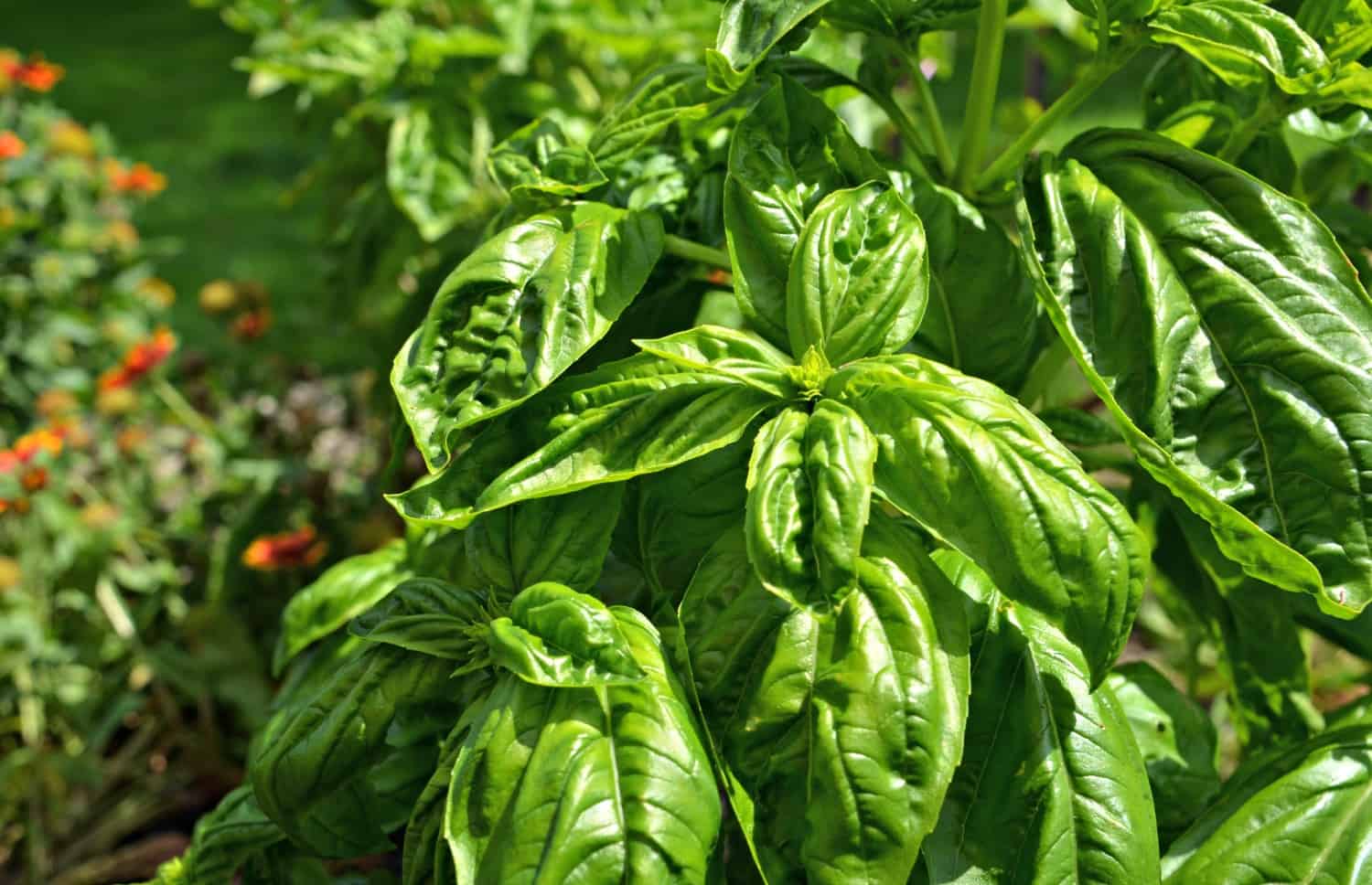
Don’t be afraid to prune basil aggressively — it’s actually good for the plant. Basil left unharvested grows tall and lanky; regular cutting keeps it full and bushy.
- Harvest from the top down, cutting back up to a third of the plant’s height.
- Cut or pinch each stem just above a pair of leaves — new branches grow from that spot, and in a few weeks the plant is ready to harvest again.
- Harvest mid-morning after the dew dries. Evening works too; just avoid the hot midday sun.
- If the plant has started to flower, pinch off the blossoms and buds first. The leaves are still perfectly good.
How to Dry Basil in a Dehydrator: Step by Step
- Rinse your basil. Trust me, don’t skip this step — I thought mine was clean and found a small worm and a couple of bugs in my rinse water. Swirl gently in a large bowl of cold water; basil bruises easily, so handle it gently at every step.
- Dry it thoroughly. Blot with towels or spin in a salad spinner, then lay leaves in a single layer between towels to pull the water out of the creases. Surface water is the #1 cause of basil turning brown in the dehydrator, and every drop adds drying time.
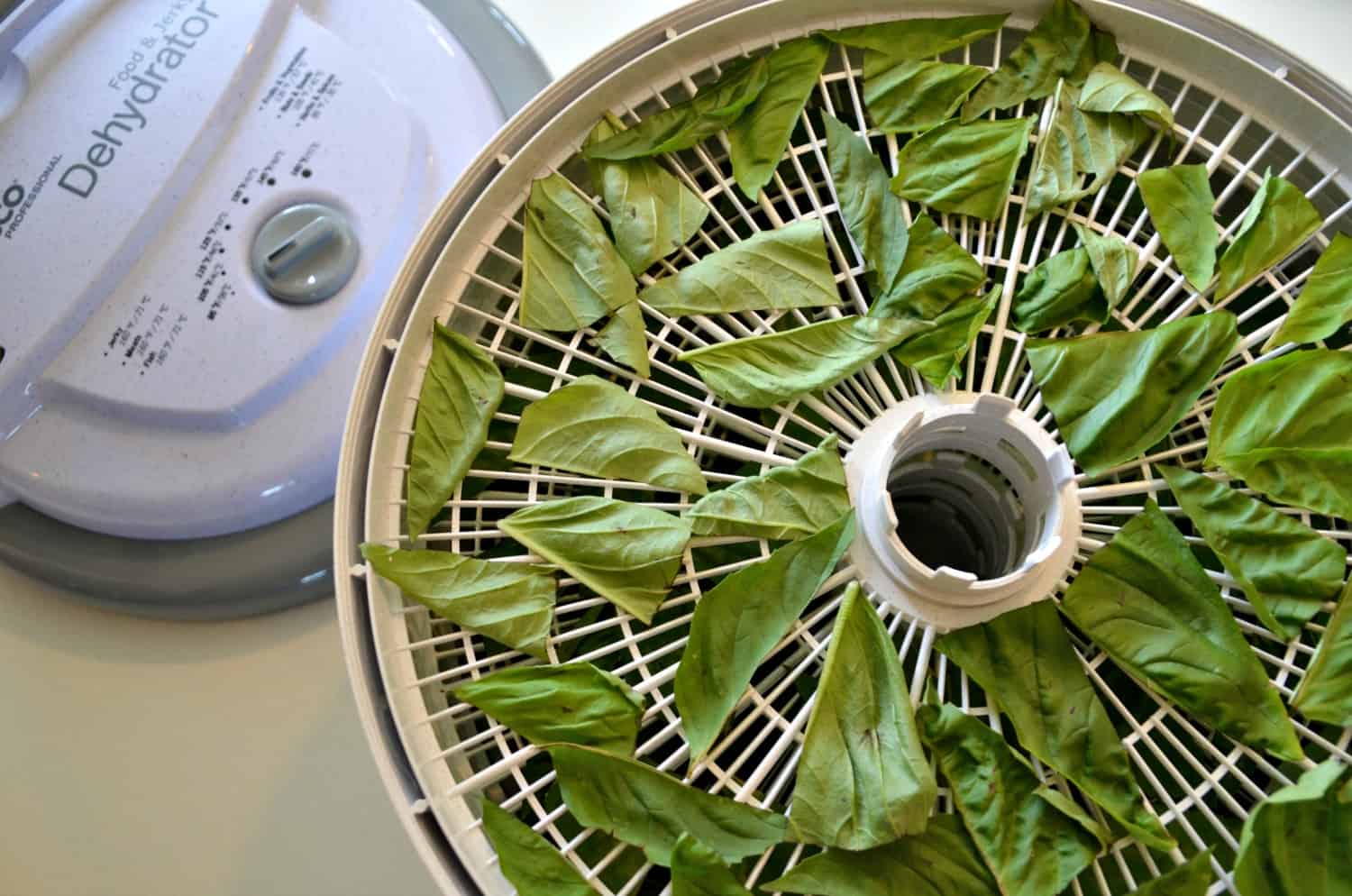
- Strip leaves from the stems. Stems hold the most moisture. I also cut the largest leaves in half to help them along.
- Load the trays. One leaf thick, with space between leaves for air to circulate.
- Set the dehydrator to its herb setting — usually 90–95°F. It’s tempting to crank the heat because basil takes so long, but high heat cooks the leaves and turns them black or brown.
- Be patient. In dry weather basil can finish in as little as 5–6 hours; in humid weather it can take 12–24 hours. Start checking at 5–6 hours, and don’t panic if it needs to run overnight — that’s normal for basil.
- Test for doneness. Leaves should snap and crumble easily, and stems should feel brittle and break when bent. If a leaf wrinkles in your hand but doesn’t crumble, it’s not done.
Storing Dried Basil
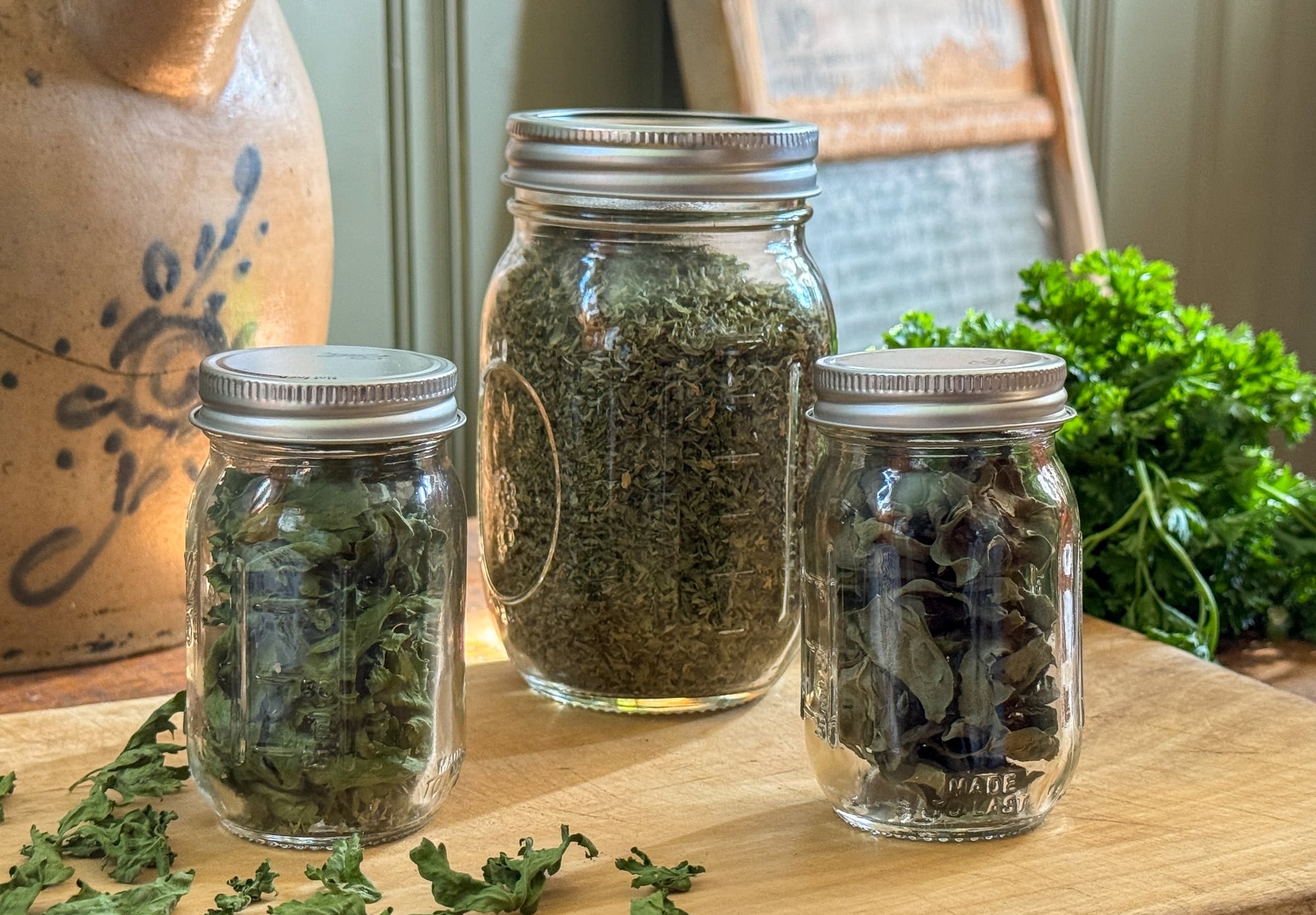
Pack dried basil into an airtight container — glass is best, and Ball jars are perfect. Keep the leaves whole and crumble them just before using; that’s where the flavor lives.
If I’m not using a jar right away, I vacuum seal it with a FoodSaver jar sealer and drop in an oxygen absorber for long-term storage. I explain exactly how (and why oxygen absorbers work) in my dehydrating fresh herbs guide.
And label the jar! You’d be surprised how much one jar of dried green flakes looks like another — ask me how I know.
Using Dried Basil
Use 1 teaspoon of dried basil for every 1 tablespoon of fresh a recipe calls for. Add it early in cooking — sauces, soups, and stews, so it has time to rehydrate and release its flavor.
One of my favorite uses: grind dried basil with marjoram, thyme, rosemary, parsley, and a little sea salt for a custom herb blend. Packaged in small jars, it makes a wonderful homemade gift.


I have the same dehydrator. I have sweet basil leaves in as I type this. They are going on 19 hours of drying and still very green and pliable. I have on the dehydrator on herb setting which is 95. It takes FOREVER to dry basil. I am in NW Tennessee. It is humid here but not inside my house.
How long does it take to dry
The Thai Basil in The dehydrator
when dehydrating only the leaves are used,,,not the step, right !
Awesome basil this year. Thanks for this!! We are from Star Lake, NY in the Adirondacks….enjoy!
How long does it take to dehydrate Basil in the dehydrator? My first time doing it. I bought a Nesco and my basil has been in there 24 hours at 95 degrees and still not dry. I did not cut the leaves but I removed the leaves from the stems. I’m drying Genovese and Thai basil if that helps.
Our basil is huge! I want to dehydrated as much as possible. Is it possible to kill the plant if I take a majority of the leaves off? How do you safely harvest the leaves all at once? Thanks!
Hi Rachel!
Don’t be afraid to aggressively prune your basil (it is actually good for it! Basil will keep growing tall if not harvested regularly, and will begin looking lanky quickly)
Harvest the leaves from the top of the plant down, cutting back up to a third of the total plant height. Be sure to cut or pinch a whole stem of basil right above a pair of leaves. In a few weeks, your basil plants will be ready to harvest again, and will begin to take on a fuller more bush-like appearance.
Enjoy your basil!
My dehydrator has a vent on top. Should I leave this open when drying herbs?
I have been dehydrating herbs for several years and each year I make my own herb blend with basil, Marjoram, thyme, rosemary and spicy basil and Parsley! I dry the herbs then I grind them into a powder in my coffee grinder and mix them including some sea salt and package in old brown medicine bottles then I give them away to friends for Christmas also to my son and they use them to season a variety of items and just love them! You can use any kind of herb combination you like! I usually get so much Parsley I dry it amd just put into pint canning jars to use in many dishes! I love growing and preserving my own herbs! Also if you do not own a dehydrator you can dry your herbs by hanging them on a clothes hanger with a close pin or rubber bands and placing them upside down in a brown paper bag in a cool dry place the herbs will dry and drop into the paper bag!
What do you use cinnamon basil for…..that sounds yummy. I found chocolate mint this year and was amazed at the flavor. Also a spicy basil that is out of this world.
I have a question for you I used my dehydrator it too is a nesco, but my lemon basil turned brown. Could this be that it had to much water on it when it dried.
What are the packets in the mason jars with the dried basil? A preserver of some sort? Where do I get those?
Those are Oxygen Absobers. The presence of oxygen decreases the storage life of dried foods, and causes deterioration. Oxygen absorbers are small packets that contain an iron powder. These food-safe packets are made of a material that allows oxygen and moisture to enter but does not allow the iron powder to leak out. Oxygen Absorbers are safe to place on top of and be contact with food. Something to keep in mind when using oxygen absorbers is that you do need to limit their exposure to air, try to get them out of the container they came in and into the container you are vacuum sealing in a bout 10 minutes, and reseal any unused oxygen absorbers that you are not using. I wrote a little bit about that near the bottom of this post on Dehydrating Fresh Herbs, you can buy Oxygen Absorbers for Dehydrated Food at Amazon
thanks for tips how to DRYING FRESH BASIL thanks again
I know times for drying vary, but this is our first run and we are wondering when we should start checking on it. How long did you run the dehydrator for? Lightly loaded trays.
Hi Melanie, I have had a ton of variation over the years with basil, I have had it try as soon as 6 hours and as long as over night. The biggest factor seems to be atmospheric humidity, if it happens to be dry where you are I would start checking as soon as 5 hours. Dried basil is awesome to have on hand, good luck!
Mine has been drying for over 24 hours and is still not dry. I had it at the lowest setting as was recommended, but finally turned it up. Some leaves are now brown while others remain green
I’m afraid if it takes this long for basal, it will take a month for pineapple and such and even longer for meat. I’m open for suggestions!
I had a spot by my porch with no grass… Poured 4 packages of seed down and watered it… Harvested half a pound of just leaves today 🙂
Thank you so much for the great tip, Jennifer! My basil plants are out of control! When I saw that my first one was doing really well, I had my husband plant two more….I’m quickly learning that sometimes less is more. I’ve been making tons of pesto and freezing them, adding them to as many dishes as possible..and still they’re monstrous. Now I know what I need to do..dehydrate!
It is crazy how well the basil did this year. I am with you I put two plants in but could of easily had more than enough basil with just one plant.
We are doing an herb garden next year, Jennifer. I am bookmaking this! Thanks.